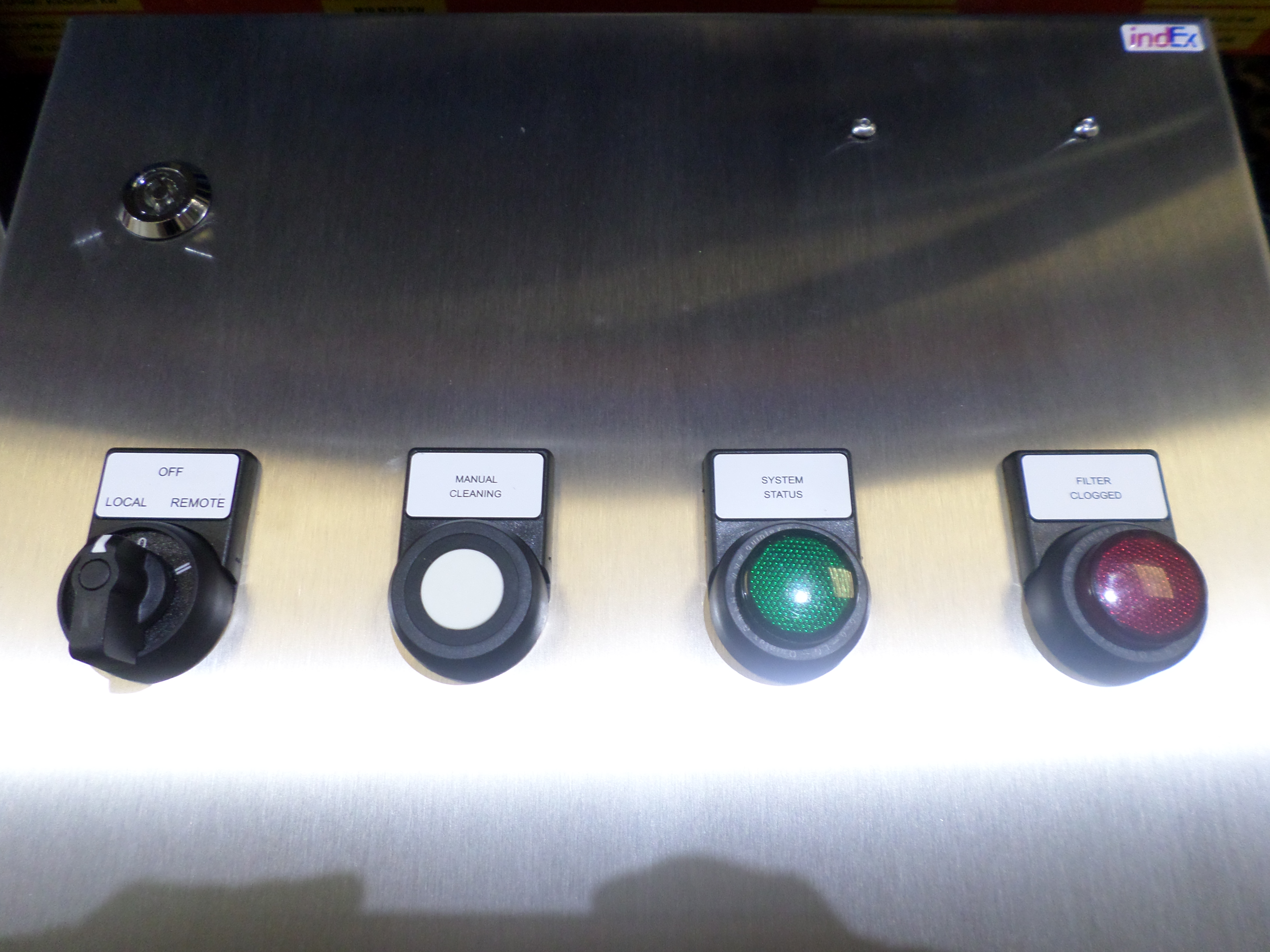
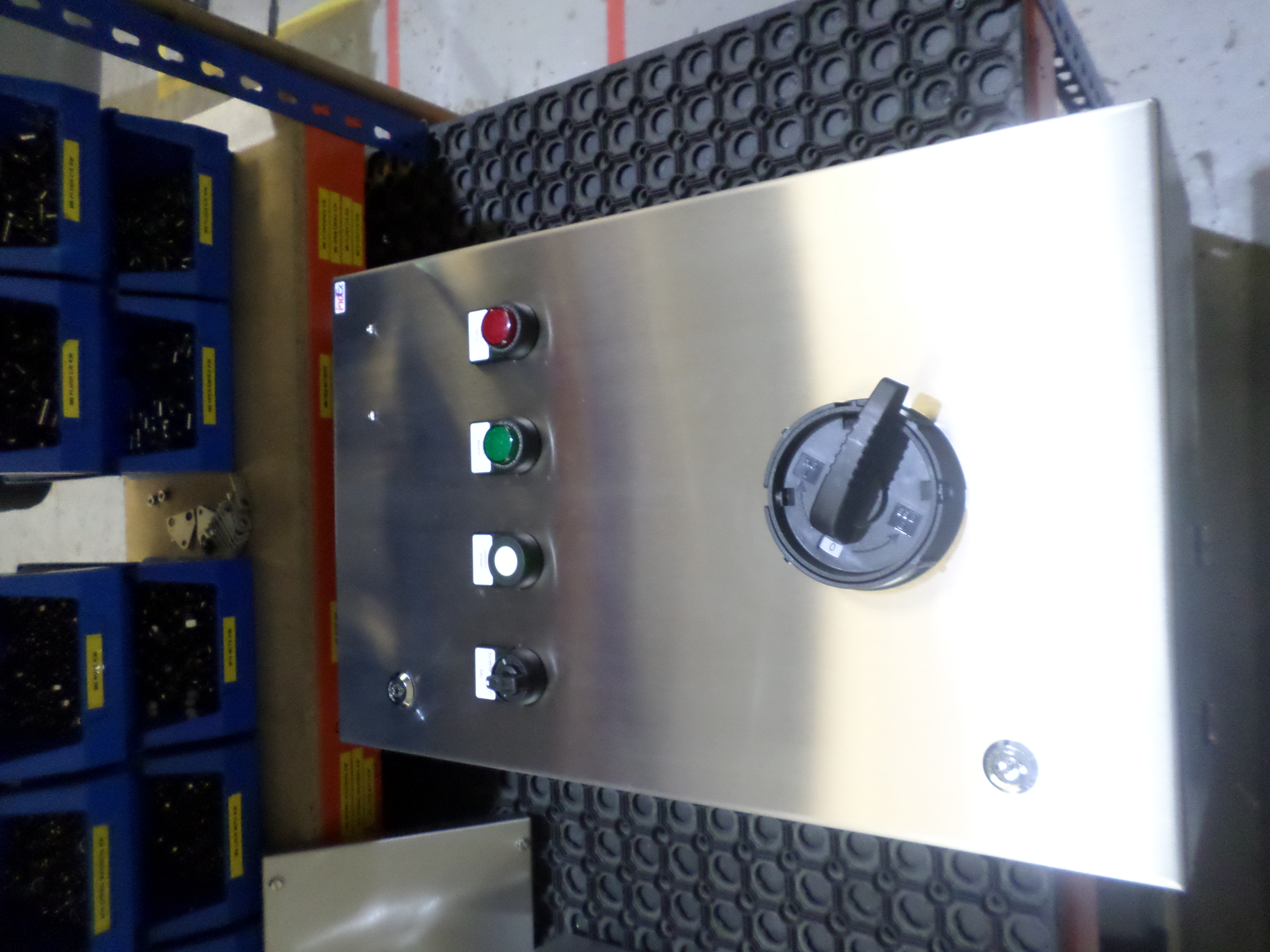
What Ex db/eb means
Ex db/eb is an ATEX combined protection method that applies two different protection concepts within a single enclosure assembly. The slash notation means the enclosure contains distinct compartments, each certified to a different standard:
- db, the flameproof compartment, certified to IEC 60079-1
- eb, the increased safety compartment, certified to IEC 60079-7
This combination is used in our control panels, where the control gear (such as switches and pushbuttons) is Ex db certified and the enclosure is Ex eb certified. Thus the combination enables certified control operators to be safely used in Zone 1 and Zone 2 hazardous areas within a single enclosure.
Ex db, flameproof protection
The Ex d (now Ex db under the revised IEC 60079-0 designation system) protection concept allows ignition sources to exist inside the enclosure, but contains any resulting explosion so it cannot propagate to the surrounding atmosphere.
To achieve this, Ex db enclosures are built to exacting mechanical tolerances:
- All joints and apertures are machined to tight flame path dimensions, defined by the gas group (IIA, IIB, IIC)
- The enclosure is strong enough to withstand internal explosion pressure without permanent deformation
- Hot combustion gases are quenched as they escape through the long, narrow flame path, cooling below the ignition temperature of the surrounding atmosphere
- All cable entries use certified Ex d glands or stopping boxes
Ex db is suitable for Zone 1 and Zone 2 (EPL Gb). It is the protection method of choice for switchgear, motor starters, and control equipment where the electrical components cannot be made non-sparking.
Ex eb, increased safety protection
The Ex e (now Ex eb) protection concept does not contain ignition sources, it prevents them forming. Ex eb equipment is designed so that sparks and excessive temperatures cannot occur under normal or specified abnormal conditions.
Requirements for Ex eb include:
- No exposed conductors that could spark under fault conditions
- Minimum creepage and clearance distances (greater than standard IEC 60664 requirements)
- Minimum IP54 ingress protection
- Temperature rise limits on windings, terminals, and surfaces
- Specified terminal tightening torques and locking mechanisms
Ex eb is the standard protection method for terminal boxes, junction boxes, and distribution boards in Zone 1. It is simpler and less expensive than Ex db, but requires that no sparking component is present in the compartment.
How combined protection works
In a combined Ex db/eb enclosure, the assembly is divided into two physically separate compartments:
- The casing of the control operators specified in our certificate is Ex d certified
- The Ex eb compartment contains the field wiring terminals, where the cable from the control panel connects
Reading the marking
A typical combined protection enclosure marking looks like this:
Ex db eb IIC T4 Gb
Breaking this down:
| Element | Meaning |
|---|---|
| Ex | Explosion protection marking |
| db | Flameproof enclosure (protection concept d, Equipment Protection Level b) |
| eb | Increased safety (protection concept e, Equipment Protection Level b) |
| IIC | Gas group, the most stringent (hydrogen, acetylene). IIA = propane; IIB = ethylene |
| T4 | Temperature class, maximum surface temperature 135 °C. T3 = 200 °C; T5 = 100 °C; T6 = 85 °C |
| Gb | Equipment Protection Level, suitable for Zone 1 (and Zone 2) |
The temperature class (T class) must be below the ignition temperature of the gas present. For hydrogen (ignition temperature ~500 °C), T4 is conservative; for carbon disulphide (ignition temperature ~90 °C), even T6 (85 °C max surface) must be verified carefully.